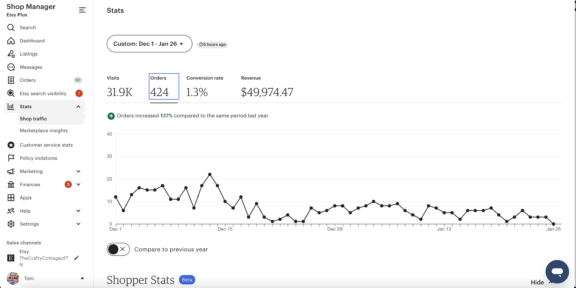
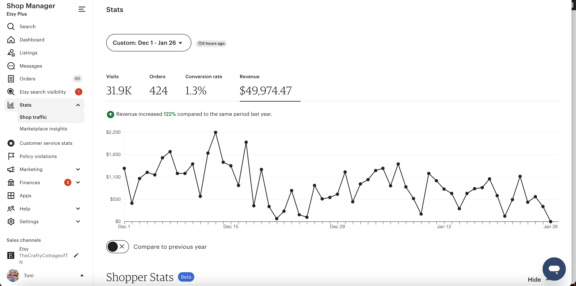
$49,974.47 in revenue (12/01/2025–01/26/2026) with +122% YoY revenue growth and +137% YoY order growth while maintaining premium pricing and presentation.
Client snapshot
(Snapshots of stats, the shopfront, and the client’s testimonials over the years are all below this initial text excerpt of the case study).
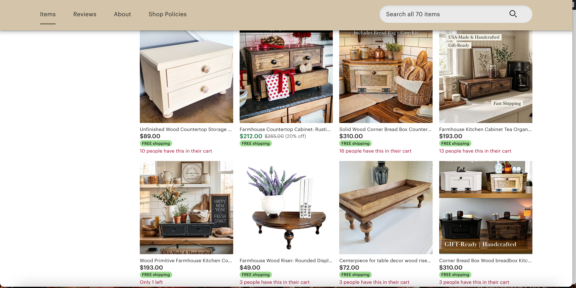
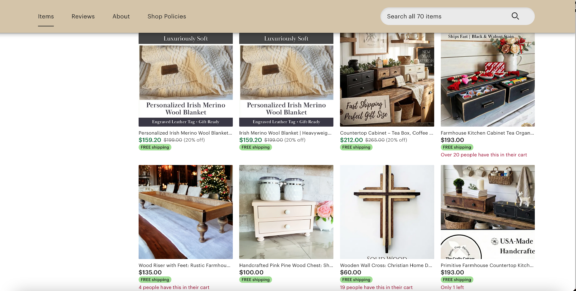
TheCraftyCottageofTN sells premium, handcrafted farmhouse home goods (cabinet organizers, bread boxes, countertop storage, décor). Price points commonly range from $60–$310+, and listings frequently show strong buyer intent signals like “X people have this in their cart.” Examples include:
-
$310 bread box with 16 people in carts
-
$193 kitchen cabinet organizer with 13+ people in carts (and another snapshot showing 20+ people in carts)
-
$89 countertop storage with 10 people in carts
-
$60 wall cross with 19 people in carts
The challenge
This wasn’t a “race to the bottom” shop. The goal was to grow revenue while protecting premium positioning—meaning:
-
listings must earn the click (high-clarity hero images + trust signals),
-
pages must convert at higher price points, and
-
the shop must stay ahead of competitors with proactive SEO + positioning updates.
What we implemented (OptiShop Framework execution)
1) Premium visual system (CTR + conversion first)
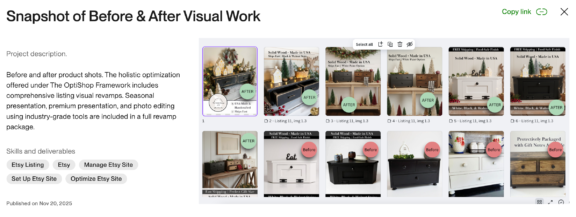
We rebuilt listing image stacks into a consistent premium presentation, including clean hero-image information hierarchy (high-visibility differentiators like USA-made, gift-ready, fast shipping, food-safe finish where relevant), plus more cohesive seasonal/premium styling where appropriate.
-
Outcome: listings read “premium + trustworthy” instantly from search and on-page.
2) Conversion-ready listing structure
We aligned listings to how buyers decide in competitive categories: clear benefits, quick validation, and reduced friction—so high-ticket items feel justified and easy to purchase.
3) SEO that matches buyer intent (without sacrificing readability)
We focused on strategic keyword alignment across titles/tags/attributes, mapping listings to the terms most likely to convert (not just broad vanity terms). The objective wasn’t “rank for everything”—it was rank for what actually sells.
4) Ongoing optimization cadence
Instead of one-and-done edits, the shop was managed with an iterative rhythm—tightening what’s working, improving what’s almost working, and staying ahead of trend/competition shifts.
Results (with timestamps)
Primary performance window (Dec 1, 2025 – Jan 26, 2026):
-
Revenue: $49,974.47
-
Visits: 31.9K
-
Orders: 424
-
Conversion rate: 1.3%
-
YoY growth: +122% revenue and +137% orders
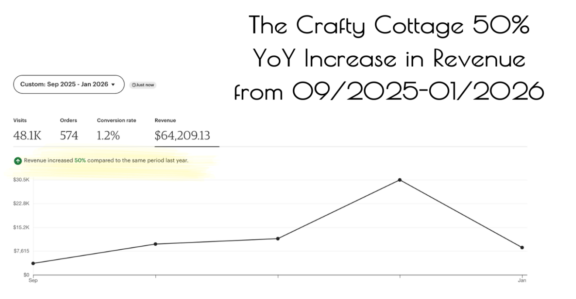
Additional supporting snapshot (Sep 2025 – Jan 2026):
-
Revenue: $64,209.13
-
Visits: 48.1K
-
Orders: 574
-
Conversion rate: 1.2%
-
YoY growth: +50% revenue
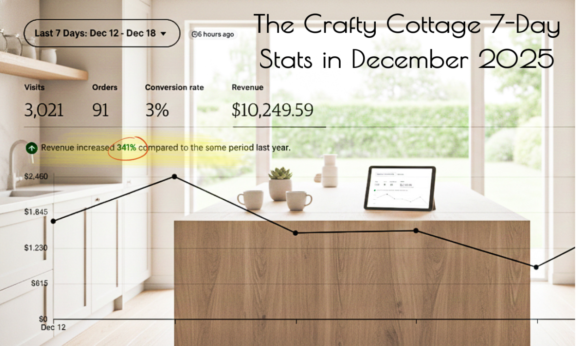
Momentum spike example (7-day snapshot in Dec 2025):
-
Revenue: $10,249.59
-
YoY growth: +341% revenue
Why this worked (and why premium sellers care)
This growth wasn’t driven by heavy discounting or “more listings for the sake of more listings.” It came from premium positioning + clarity, built for Etsy’s reality:
-
Search is a split-second decision → the hero image + differentiators must win the click.
-
High-price conversion requires trust → buyers need fast proof, polish, and confidence.
-
Scaling requires systems → visuals, SEO, and iteration can’t be random; they have to be repeatable.
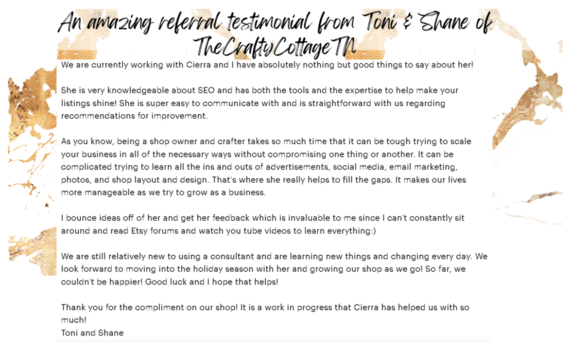
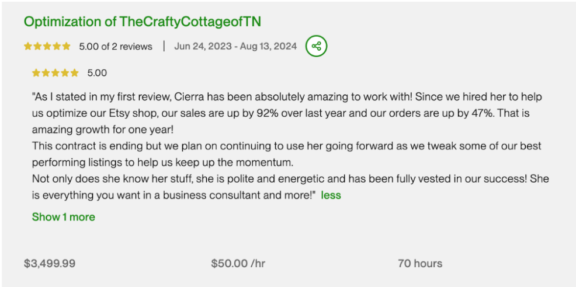
Client voice (excerpts from Toni’s heartwarming testimonials)
-
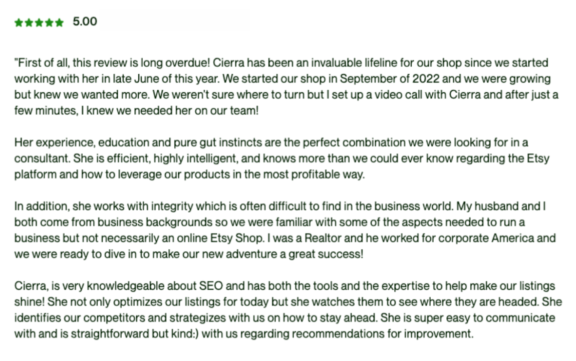
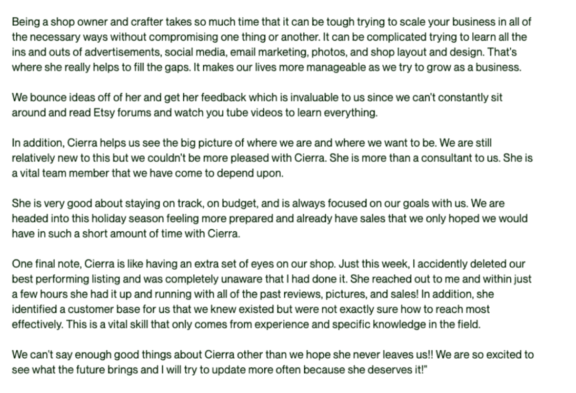
“Our sales are up… and our orders are up…”
-
“She’s very knowledgeable about SEO… and helps fill the gaps.”
-
“She… identifies our competitors and strategizes… to stay ahead.”
Positioning takeaway for premium prospects
If your products are already strong, and your price points require a higher bar—this is the exact kind of outcome premium brands should expect from the right optimization partner: clean positioning, conversion-focused visuals, buyer-intent SEO, and proactive iteration that compounds over time.